Advanced Dental Implants in Boise, ID
Copyright ©Nuvolum 2026. All Rights Reserved.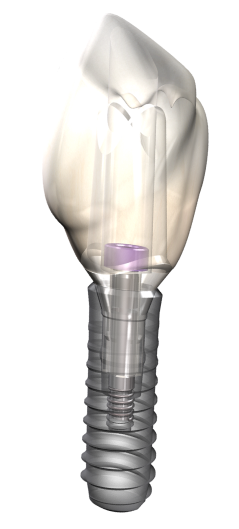
Permanent Tooth Replacement, Engineered for Stability
If you’re missing teeth — or living with failing dental work — you’re likely looking for something permanent. Something that doesn’t shift. Something that feels secure.
Dental implants are designed to replace missing teeth from root to crown.
At PEAK Dental Implant Specialists in Boise, your treatment is planned and delivered by an integrated team of board-certified oral surgeons and prosthodontists. From your first 3D scan to your final restoration, your care follows a coordinated surgical and prosthetic protocol built for long-term function and aesthetics.
We focus on advanced implant rehabilitation — including complex and full-arch cases.
What Is a Dental Implant?
A dental implant is a titanium post that replaces the root of a missing tooth. It is surgically placed into the jawbone, where it fuses with the bone through a natural biological process called osseointegration. Once healed, the implant supports a custom crown, bridge, or full-arch prosthesis.
A complete implant restoration consists of:
- The titanium implant (artificial root)
- The abutment (connector)
- The custom-designed crown or prosthesis
Unlike removable dentures or traditional bridges, implants are fixed in place and help preserve the underlying jawbone.
Why Are Dental Implants Considered the Gold Standard for Tooth Replacement?
- Stability: Implants are anchored in bone and do not move when you eat or speak.
- Bone Preservation: After tooth loss, the jawbone can shrink over time. Implants provide stimulation that helps maintain bone structure.
- Natural Aesthetics: Your final restoration is designed by a prosthodontist with advanced training in complex restorative care.
- Protection of Adjacent Teeth: Implants do not require grinding down healthy neighboring teeth, unlike traditional bridges.
- Long-Term Design: Dental implants are intended to function as long-term tooth replacement solutions.
Dental Implants vs. Dentures
| Dental Implants | Removable Dentures |
|---|---|
| Fixed in place | Removable |
| Help preserve bone | Bone loss may continue |
| Designed for stability | May loosen over time |
| No adhesives required | Often require adhesives |
Key Difference: Dentures replace teeth. Implants replace both teeth and the supporting root structure.
Who Is a Candidate for Dental Implants?
You may be a candidate if:
- You are missing one or more teeth
- You are frustrated with removable dentures
- You have failing dental work
- You want a fixed solution
Even patients with reduced bone volume may qualify for additional procedures such as bone grafting or sinus lift surgery. The only way to determine candidacy is through a comprehensive evaluation using advanced 3D CBCT imaging.
Who May Require Additional Evaluation Before Treatment?
Certain medical or dental conditions may require further assessment:
- Uncontrolled diabetes
- Heavy tobacco use
- Untreated periodontal disease
- Significant medical instability
These conditions do not automatically disqualify you, but they must be evaluated prior to implant placement.
What Is the Dental Implant Process at PEAK?
Implant success depends on structured planning. At PEAK Dental Implant Specialists, your case is reviewed collaboratively by our surgical and prosthetic team.
Step 1: Comprehensive Consultation – We perform advanced 3D CBCT imaging to evaluate bone anatomy and restoration design.
Step 2: Digital Treatment Planning – Implant placement is mapped virtually before surgery to optimize position and long-term function.
Step 3: Surgical Placement – Implants are placed by board-certified oral and maxillofacial surgeons.
Step 4: Healing Phase – Over several months (often 3–6 months), the implant integrates with your jawbone.
Step 5: Final Restoration – Your prosthodontist delivers your custom crown or full-arch prosthesis.
For qualifying full-arch cases, fixed temporary teeth may be attached the same day as surgery.
How Long Do Dental Implants Last?
Implant longevity depends on:
- Surgical precision
- Bone quality
- Prosthetic design
- Bite alignment
- Oral hygiene and maintenance
When properly planned and maintained, dental implants are designed to function as durable, long-term restorations.
What Makes PEAK Different?
Dental implant treatment requires both surgical expertise and advanced restorative design. At PEAK Dental Implant Specialists in Boise:
- Oral surgeons and prosthodontists collaborate on every case
- Implant positioning is planned around the final restoration
- Advanced digital imaging and planning guide surgical accuracy
- Complex cases, including full-arch and bone-deficient situations, are treated
- Hybrid prosthetic restorations may qualify for a lifetime warranty under specific terms
This integrated approach reduces fragmentation between surgical and restorative phases.
Can Dental Implants Replace All of My Teeth?
Yes. For patients missing all teeth in an upper or lower arch, PEAK offers:
- Full-arch implant reconstruction
- Hybrid fixed prostheses
- Teeth in a Day protocols
- Zygomatic implants for severe upper jaw bone loss
Are Dental Implants Painful?
Implant surgery is performed under appropriate anesthesia for patient comfort. After surgery, most patients experience temporary soreness that can be managed with prescribed or over-the-counter medications.
Are Dental Implants Safe?
Dental implants have a strong history of clinical success when placed by trained specialists. Potential risks may include:
- Infection
- Implant failure to integrate
- Nerve irritation (rare)
- Sinus-related complications in upper jaw cases
Schedule Your Dental Implant Consultation in Boise
Your consultation at PEAK Dental Implant Specialists includes:
- Advanced 3D imaging
- Surgical and prosthetic evaluation
- Clear explanation of treatment options
- Transparent pricing discussion
- Review of warranty eligibility for hybrid restorations
If you are considering dental implants in Boise, a structured evaluation is the first step toward determining whether a fixed, long-term solution is right for you.